Showing posts with label sexism. Show all posts

Tuesday, 26 April 2011

Yes, he is black. So what?

In the Snooker World Championships this week, Rory McLeod played John Higgins. He was quite comfortably beaten. He missed too many shots that, at that level, are considered gimmes. He tried hard and upset a few people with his slow, attritional style. None of this is particularly remarkable, but what is remarkable is that Rory McLeod is snooker's only black professional, and no-one seems to mentioning that fact.

Hold on..... this is not another pro-equality, minority empowering blog. This is The Alternative View. So why is this issue so remarkable?

I don't recall McLeod's colour being mentioned at all during the BBC match commentary, their coverage or the match reports on their website. The Guardian's match report is the same. Apart from, ironically, me, no-one seems to have mentioned it at all. And why should they?

I recall a blog post on the Pink Stinks website about a Matthew Syed article published in the Times. Syed had interviewed Fran Halsall, the swimmer, and written a massively favourable article about her. He did make one mistake though - he opened the piece by commenting on her appearance. That small flaw set the alarm bells ringing at Pink Stinks HQ, and prompted the following response:

http://pinkstinks.wordpress.com/2009/10/30/dressed-for-success-what/

You might notice my counter-arguments tacked on the end of their blog. If you think I have held a grudge over this for two years, I really haven't. I like the Pink Stinks blogs and I think their "campaign for real role-models" is a great initiative which the authors, Emma and Abi, are clearly very passionate about. In fact, I have to actually credit Emma for her suggestion that I set up my own blog, which is where, um, this all came from!

For me the counter-argument to most pro-equality causes has always been that they tend to put people in boxes, and putting people in boxes is actually more divisive than it is helpful. In the Halsall / Syed scenario, Halsall is in the oppressed box and Syed is the oppressor. But, actually, Fran Halsall has gotten to where she is through hard work and determination and she is a good-looking girl. No-one, including Matthew Syed, would argue otherwise. She probably didn't feel oppressed or objectified, and he probably didn't intend for her to.

Syed has also gotten to where he is through hard work and determination, and not just with his award-winning journalism. He was an olympic table-tennis player. He must understand the effort that Halsall has gone through, but does that mean he can't acknowledge that she is a woman? If you follow the link (in the Pink Stinks blog) and read his article, you will actually find that he only briefly comments on her looks at the start, in the context of the glamorous photo shoot she is attending, and then swiftly moves on to itemise and laud her achievements and her character. It is hardly straight out of Nuts magazine, is it?

It is not enough to say that women are objectified or marginalised in sport. It is not enough to say that black people are under-represented in snooker. Without context these arguments are unsubstantiated. There cannot be a quota system for sporting achievement or media coverage, and if there was one, it would not represent equality. When a sportsperson of any colour, gender, creed, age or class can perform at the highest level, win or lose, and have no-one qualify their judgement based on anything but the contest at hand, then that will truly constitute equal treatment.

The same should be said of journalists and any other professional. Do not judge what I am, judge what I do. Judge the articles he writes, the snooker he plays, the speed she swims. Judge it on merit and relate to it accordingly. If you are bad at what you do, you can always work harder at it. You can never change who you are.

Matthew Syed's article is fair, balanced, well-written and complimentary. If you forget that he is a man, what fault can you find with it? It doesn't matter that Syed is a man. It doesn't matter that he is half-Pakistani, and therefore eligible for minority perspective himself. As a writer, he should only be judged on what he writes, not on some presumed agenda which he may or may not have.

People are different. The human population is multi-faceted and diverse, but there are trends amongst groupings. For example, West Indian men tend to be more powerfully-built than white British men, which can make them more suited to sprinting, but less suited to distance running than those from certain parts of Africa. But nature - in so much as our understanding of genetic and geographical influences allows - doesn't have all the answers. Culture is important too. I'll use my favourite example here again - Brits of Asian descent are well represented in cricket, but not in football. Whether for natural or cultural reasons, or both, those of West Indian heritage, like McLeod, are certainly better represented in athletics than they are in snooker. There is nothing wrong with this, so long as it is organic. There is another factor too: individuality.Rory McLeod is unique. But then so are John Higgins, Fran Halsall and Matthew Syed, and so are you and I.

So, for anyone with no agenda, other than trying to understand and occasionally pass sensible comment on the world around us, let's hope that some day everyone can simply be treated how Rory McLeod has been treated this week - just like anyone else.
Published with Blogger-droid v1.6.5

Tuesday, 15 March 2011

I'm male. I'm white. I'm not yet 30. What happens if I'm the one who is discriminated against?

Let's discuss a hypothetical scenario: I feel that I'm discriminated against at work.

It's not on account of my race, gender, age, religious beliefs or sexuality - none of which could be considered marginal.

I have read the employee handbook, and I have referred the situation to Unite, the union. They both refer to employment law, which prohibits discrimination - but only on specified grounds, such as those listed above.

The truth is, I don't know exactly why I am discriminated against. I just feel, sometimes, that my face doesn't fit. This is not covered in law.

Bullying at work is covered by law, although Unite recognise that, as a form of discrimination, bullying is hard to define and even harder to confront.

Alarmingly I realise that some of the bullying behaviours identified on Unite's website describe ME. Am I a bully? I certainly don't mean to be, but I can be bloody sarcastic sometimes.

I read on, and the website tells me that bullying behaviour is often a reaction to being bullied - of course, this is playground stuff, and it is silly. No one bullies me.

But then I read about institutionalized bullying. Qualified by effect rather than intention, this may make its victims feel hopeless, depressed or worthless. It may involve passing people over for promotion, even if they are better qualified or more experienced. It may involve favouritism towards others, or inequal treatment (better pay, better opportunities, more recognition for the ones whose faces do fit). Institutionalised bullying may occur when you are asked to perform to a higher level than those around you, without the benefits or status which should accompany such responsibility. You may find that you have to pick up the slack for others, including those above you, for little or no extra reward. You may find yourself kept in the dark about your own future - especially where short-term secondments and departmental re-organisations are concerned. You have proven you can do the job, will you be rewarded? There may be little opportunity for progression in your role, particularly if those above you seem to be job-for-lifers. You may feel that you can't complain about these things or that, if you do, your words fall on deaf ears. Worse still, if you speak up you may be resented, or even further victimised, as a result.

This is institutionalised bullying. It is hurtful, and cruel, and it can make your working life a misery. And, looking around, I see others like me who must feel the same - how do they deal with it? Happy pills? Or do they become, eventually, so jaded and worn down by it that they just don't care.

Of course, this is hypothetical - if it were true I wouldn't write about it. I'd be too scared of the consequences.
Published with Blogger-droid v1.6.5
Tuesday, 11 January 2011

Official: The Beeb is ageist. And sexist too!

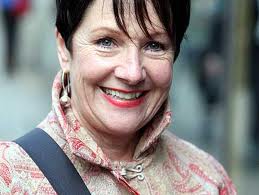
Miriam O'Reilly: Activist?
Yep. The BBC discriminates against older women.

That's the verdict of the employment tribunal which has ruled that Miriam O'Reilly - the former Countryfile presenter - was unfairly sacked and replaced by a younger model.

It seems pretty black and white, particularly as several other older female presenters were removed at the same time, and replaced in exactly the same manner. The BBC appears to have acted unfairly, and the ruling will be widely celebrated. The journalist and presenter (and apparent spokesperson for the rights of older women) Mariella Frostrup called it a "landmark decision."

The BBC themselves, bound by their forcibly induced political correctness, have unreservedly apologised and even swiftly promised to discuss re-employing Ms O'Reilly.

It was interesting to watch Channel 4's take on events. As a rival firm, you might think that C4 would want to stick the boot in, but instead they produced both sides of the story - it would have been nice to see the BBC do the same, but their response was a limp, cap-in-hand apology:

http://www.bbc.co.uk/news/entertainment-arts-12161045

Read (BBC correspondent) Torin Douglas's analysis on the right hand side - he states the company line: the BBC will change it's employment policy on the basis of the O'Reilly case, and he believes the rest of the industry will follow suit.

There's a sub-text here, buried deep in the lower paragraphs of the BBC article. Jay Hunt, their former controller (and a 43 year-old woman) resents the accusations against the BBC. Through this vicarious and carefully gender-marked defence, the writer is hinting at what he really wants to write.... that this tribunal is a bit of a sham.

The BBC can't say it, but those outside of the corporation can.

Nick Ross: Pragmatist?
In Channel 4's report, Nick Ross (a man who also was replaced by the BBC when he passed his sell-by date) said that this was something TV Presenters just had to accept. He pointed out that most presenters work on what is effectively a freelance basis and, as a result, they have little job security. He spoke of his time presenting Crimewatch as a privelege which he missed, and was disappointed to have lost, but also said that he accepted it was the nature of the business.

These views are not the company line. They are not politically correct - they also happen to be true. Television and other media are driven by consumption. Decisions about programming, including presenters, are made to ensure that stations get as much of the viewing figures as they can. That is the nature of the beast.

Even more controversially, Ross turned the gender-debate tables on younger women, brazenly stating that "not many mingers" get the prime jobs. Attractive younger women, he argues, are actually advantaged over their male counterparts, and no-one is complaining about that.

Good on you Nick - another politically incorrect comment, and another one that is spot on. Try watching Sky Sports News, and tell me that attractive young women don't get prime jobs in television.  
Jackson, Sawyer and Thompson: "Not mingers"
Sky, of course, know that their target audience would rather see Charlotte Jackson, Natalie Sawyer or Georgie Thompson telling them about football than an.... erm.... Miriam O'Reilly-type. Your average Sky Sports News viewer might not be that fussed about the quality of the journalism (which is usually pretty slick, as it happens).

Of course this is wrong. Reward should be based on merit, not on superficiality. But TV isn't the only culprit here - it happens in all walks of life. Attractive people (yes, women and men) do have an advantage in any recruitment process. That, unfortunately, is human nature.

You can but hope that, in the real world, looks wouldn't be a defining factor in giving someone a job. But TV isn't the real world. It's a visual medium. Like cinema, photography and any visual art it depends, by its most basic nature, on what it looks like. That's what it is and that's why I think the BBC have been hard done by.

Sky, on the other hand, are a commercial business, privileged to not be bound by the same public-service code as the BBC. Would they change their recruitment policy in the name of equality? No chance. Maybe they could follow another course of action though. Perhaps they could scapegoat some high-profile presenters in some sort of stand against sexism? Surely they wouldn't stoop so low. Oh, hang on.....

Gray and Keys: Sexist?
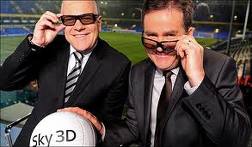
Yep, the Andy Gray and Richard Keys scandal. The pair shared a conversation expressing some politically incorrect, sexist views. Perhaps they thought the conversation was private, and that their microphones were switched off. Perhaps they are, like anyone else, entitled to their opinions? But unfortunately for them, a media circus and moral panic ensued. Both presenters were warned about their conduct.

Then, footage emerged of some 'sexist' banter, in which Gray asked Charlotte Jackson to help him attach his microphone pack down his trousers. Now I must say that if this was a sackable offence in my office, we would all (men and women alike) be heading for the Job Centre. Innuendo at work is commonplace and, in most cases, harmless. But, in the context of the media storm, it was enough to get Gray sacked. Immediately. Without review.

Charlotte Jackson: Sex object?
Other Sky presenters might be nervously wondering what a cursory glance through the archives might find them being accused of. There's an inevitable laddish culture on shows like Soccer Saturday - and the likes of Paul Merson are hardly angels. Soccer AM features a weekly Soccerette. Is it not sexist when the presenter flirts with her, or when the whole studio celebrate or commiserate depending on whether she has a boyfriend or not? Perhaps the female presenters who bolster their careers by posing in Lads Mags, including Miss Jackson, should be sacked for reinforcing the view of women as sex objects?

Of course, this won't happen. There is no agenda for sacking Paul Merson and co. The Soccerette feature and the Lads Mag shoots are considered a bit of fun (whether this is right or wrong is another debate in itself).

Paul Merson: Not sexist?
There's no £1.7m contract to consider, as there was apparently in the Andy Gray case. And why should Sky address institutionalised or culturally embedded sexism when it can get away with vilifying one or two presenters? Gray and Keys were getting long in the tooth anyway - like Miriam O'Reilly - but with their reputations in tatters there will be no employment tribunal for them. They can match O'Reilly's just claim that 20 years of loyal (not to mention pioneering and award-winning in Gray and Keys' case) service demands better treatment. But it is a futile argument for them. Their careers are over, but Sky Sports will come through all of this unscathed and move on, with its artistic license and editorial discretion in tact.

For the BBC though, there has now come a point where political correctness and self-denial begin to overlap. The corporation will follow a course of action which it would not have done before. O'Reilly will probably find herself back on prime-time TV, and some other, equally innocent and perhaps equally competent presenter, who might be a bit younger and/or more attractive, will find themselves out of a job as a result.

If the Beeb's interpretation of their audience's needs were correct, then viewers who are turned off by O'Reilly will literally turn off. They'll watch something else instead, and the BBC will be powerless to stop them.

The commercial channels will be rubbing their hands with glee - enjoying their freedom and profit while the BBC continues to be hamstrung by their enforced sense of diplomacy.

Perhaps the BBC would be able to produce a better standard of show to compete with the commercial channels if it didn't have to ensure all age, gender, race and religious aspect of multi-cultural Britain are "fairly" represented (the truth being tokenism rather than fairness).

But we do live in a country where even Nick Ross' comments immediately provoked anger - God help the man for having an opinion.

John Snow: Sexist?
John Snow closed the Channel 4 News coverage by reading out an e-mail deriding his own presenting ability and his alleged sexist banter with Ross.

"Sack Snow," read the e-mail.

Not because of his age. Not because of his gender. No. Sack him because he presided over a balanced analysis of a controversial subject, including points of views both for (Frostrup) and against (Ross) the verdict. Sack him because he dared to allow Ross to question the view that someone our society categorises as marginalised must automatically be in the right.

Were it to happen, I wonder what an employment tribunal might make of that sacking? Would Snow be backed? Would he win a "landmark" case?

Sadly, I doubt it.
Published with Blogger-droid v1.6.5